

Hide Care
Your bison hide is built to last decades. Here's how to keep it looking the way it did the day it arrived.
When it arrives
Lay it out flat, fur side up, and give it a day or two to settle. If you want to speed it up, hang it over a railing or the back of a sofa overnight.
Every delivery requires a signature, so someone needs to be there or you'll want to arrange a hold with the carrier.
Where to place it
Bison hides do best in low-traffic areas. A hide that's walked on every day will pack down and gather dust faster than one beside a bed, in front of a fireplace, under a coffee table, or draped over a sofa. Keep it away from where pets like to sleep, unless that's exactly what you bought it for.
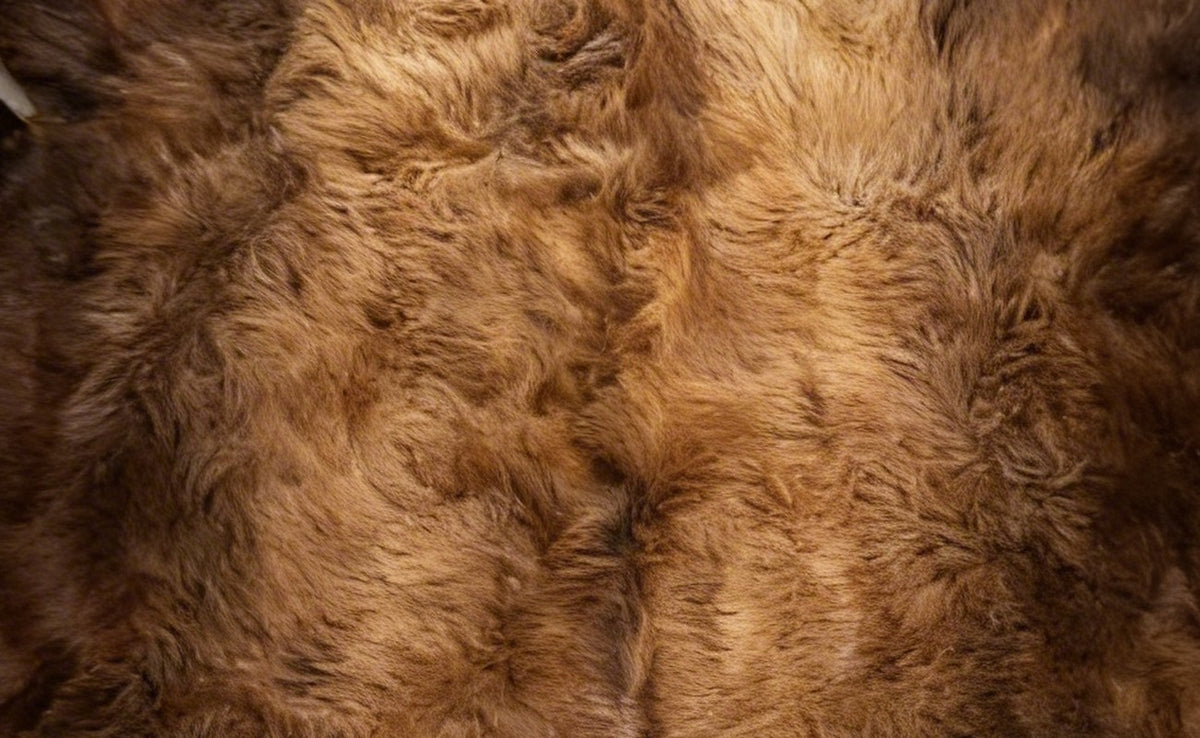
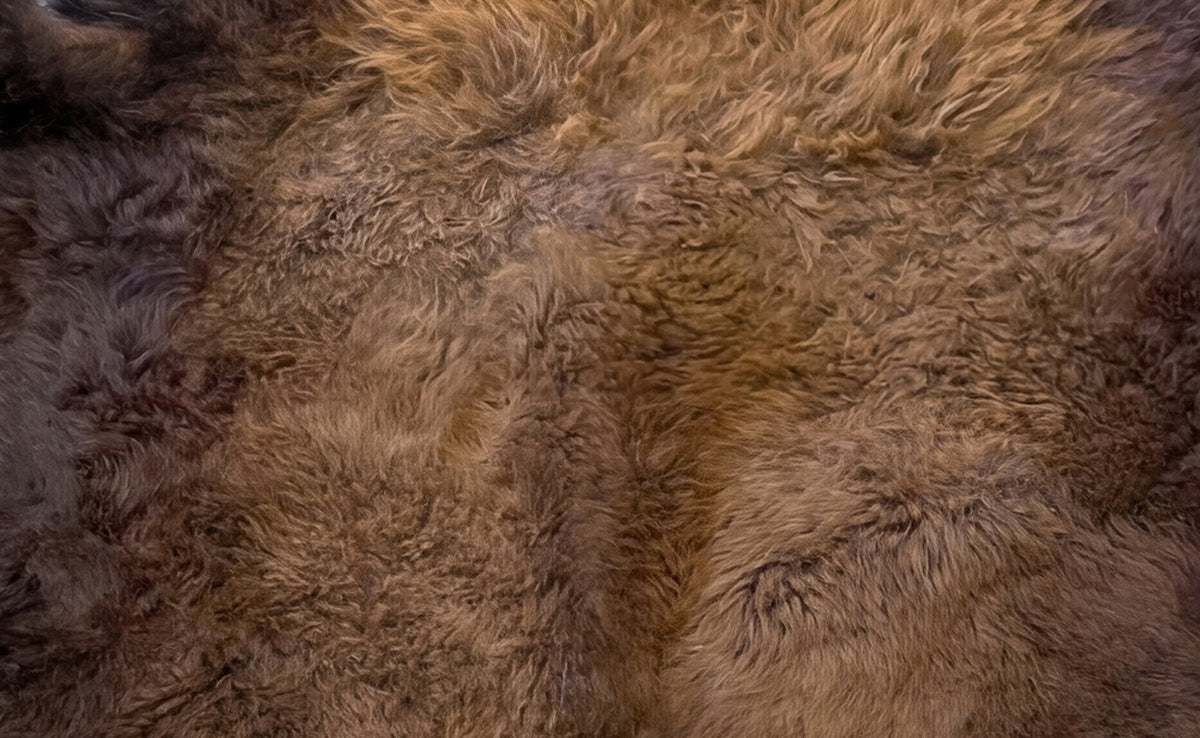
Frontier Select has the firmer hide and lies flattest as a rug. Frontier Reserve is softer and lives best on a bed, a sofa, or your shoulders, though it works beautifully on the floor in a quiet corner. If you're still deciding, see the two side by side.
Keep both out of direct sunlight for long stretches. Like any natural fur, the coat will lighten over years of sun exposure.
Using it as a rug
Put a rug pad under it. A felt pad, or a felt and rubber combination, keeps the hide from sliding on hard floors and protects the suede from wear. Cut it an inch or two smaller than the hide all the way around so it stays hidden.
If the hide sits somewhere it gets walked on, turn it now and then so the wear spreads evenly instead of packing down one path through the coat.
Bunching and matting
Every hide has some. The coat carries the texture of a real animal, and you'll find areas where the fur bunches, curls, or lies matted, most often along the spine or where the hide is densest. This is normal, and it's not a defect.
Most of it relaxes with time. For the rest, work the area gently with your fingers, or hang the hide outdoors and beat it with a stick the old-fashioned way. Never brush against the grain, and never use a wire brush.
Shedding
Some shedding is normal, especially in the first few weeks and in spots that get handled or sat on. It settles down. How much you see depends on the density of the coat, the climate in your home, and where the hide lives. It isn't a sign anything is wrong.
Refreshing the coat
The simplest thing you can do is take it outside and shake it. A good shake every few weeks knocks loose dust out of the fur and keeps the coat standing full.
For a deeper refresh, the best method is the oldest one. Hang the hide outdoors on a line or railing and beat it with a stick or broom handle, the way rugs were cleaned for generations. This fluffs the coat, airs it out, and knocks the dust loose from deep in the fur. Do this a few times a year, or whenever the coat starts to look flat.
Vacuuming
A vacuum works well between beatings. Use the hose attachment or a flat upholstery head, suction only, and go with the direction of the fur. Never use a vacuum with a rotating brush bar. It will pull and mat the coat. If your vacuum has a brush roll, turn it off.
Spills
Blot immediately with a clean dry cloth. Don't rub. For anything more than water, dab with a cloth barely dampened with cool water, then let it air dry fully away from heat. Don't use household cleaners, soap, bleach, or anything with alcohol on the fur or the suede side.
If it gets wet
Lay it flat, fur side up, somewhere with good airflow, and let it dry slowly on its own. Keep it well away from radiators, fireplaces, vents, space heaters, and hair dryers. Fast heat is what damages leather, not the water. Never soak or saturate a hide on purpose to clean it.
The suede side
The underside of your hide is natural, untreated suede. It doesn't need conditioning. If it picks up dust, a soft dry brush is all it needs. If it gets damp, let it dry fully before it goes back on the floor or furniture.
Storage
If you need to store your hide, make sure it's clean and completely dry first. Keep it somewhere cool, dry, and dark. Never store it in plastic. A cotton sheet or breathable bag is ideal, and it's worth checking on it once a season.
What to avoid
- Steam cleaners and carpet shampooers
- Rotating brush vacuums
- Wire brushes, or brushing against the grain
- Household cleaners, soap, bleach, and solvents
- Direct heat from radiators, vents, or dryers
- Prolonged direct sunlight
- Soaking or saturating the hide
- Plastic storage
If something happens that isn't covered here, email us at care@hidefrontier.com before trying anything. We'd rather talk it through than have you guess.